By Kelfala Kargbo
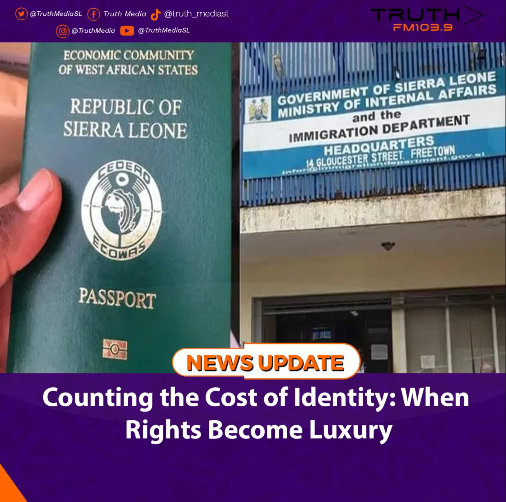
Freetown, 30th March 2026- In Sierra Leone, rights are enshrined in the constitution, the right to life, association, and free speech among them. Yet, in practice, the right to secure basic state documents such as passports, birth certificates, and national ID cards has increasingly become a privilege, priced beyond the reach of many citizens.
The Economics of Centralisation- With a population of roughly 8 million, Sierra Leone operates a highly centralised system for passport issuance. The Immigration Department in Freetown remains the sole hub, forcing applicants from distant provinces to spend heavily on transport and accommodation. For a citizen from Kailahun, the journey alone can cost thousands of Leones before even paying the official fees.
The bottleneck is visible: queues stretching for hours, crowded halls, and frustrated applicants. Without connections, many say it is nearly impossible to secure a passport within a week. Meanwhile, foreign nationals (Lebanese, Asians, and others) are often accused of receiving preferential treatment, cutting through lines while Sierra Leoneans wait.
The Price of a Passport- The financial burden is stark. Sierra Leone’s passport costs between USD 100 and USD 180, making it the most expensive in West Africa. Nigeria charges between USD 65 and USD 131, while Ghana last year reduced its fees by 30 percent, bringing the cost down to USD 23.
At current exchange rates, Sierra Leoneans pay around NLe3,000 (USD 132) for a passport. This represents an overcharge of nearly NLe719 compared to the official USD 100 benchmark. For ordinary citizens, the difference is significant, especially in a country where average monthly incomes are far below the cost of a single passport.
The Missing Millions- The financial implications extend beyond individuals. According to the Institute for Governance Reform (IGR), between 60,000 and 70,000 passports are printed and sold annually. At NLe3,000 each, that amounts to NLe180 million (180 billion old Leones) in revenue. Yet, none of this has reportedly entered the Consolidated Revenue Fund.
Instead, the e-passport contract, managed by Netpage SL Ltd in partnership with HID Global, has been renewed three times since 2023 without parliamentary ratification. Netpage claims to have paid NLe3 million to the Ministry of Internal Affairs, but questions remain over why royalties have not flowed into state coffers.
Fraud and International Fallout- The passport business has also been marred by fraud. Applicants report being duped by individuals posing as immigration staff, who vanish after collecting payments. The Immigration Department has issued warnings, but the practice persists.
The consequences have gone global. In January 2026, the United States imposed a permanent visa ban on Sierra Leone, citing “woeful inadequacies” in screening and vetting procedures. Allegations that Sierra Leonean diplomatic passports were issued to foreign drug traffickers, including Europe’s most wanted, Jos Leijdekkers, have further damaged the country’s reputation.
Governance and Accountability- Parliament’s Public Accounts Committee has flagged serious irregularities, including the renewal of Netpage’s five-year contract without cabinet approval. Chair Hon. Ibrahim noted that constitutional procedures were bypassed, leaving the government with no financial benefit while citizens bear the cost.
The numbers tell the story: millions in lost revenue, thousands of citizens priced out, and a country facing international sanctions. What should be a constitutional right has become a costly commodity, exposing the intersection of governance failure, financial mismanagement, and the erosion of public trust.