By: Emmanuel Mbowa
Freetown, 15th January 2026- The National Consumer Protection Agency (NCPA) has expressed concern over delays in the investigation of alleged expired ethanol stored at Kadco’s warehouse in Cline Town, Freetown. The probe, led by the National Consumer Protection Commission (NCPC) in collaboration with the Sierra Leone Standards Bureau and Food and Feed Safety, was set up following complaints from consumers.
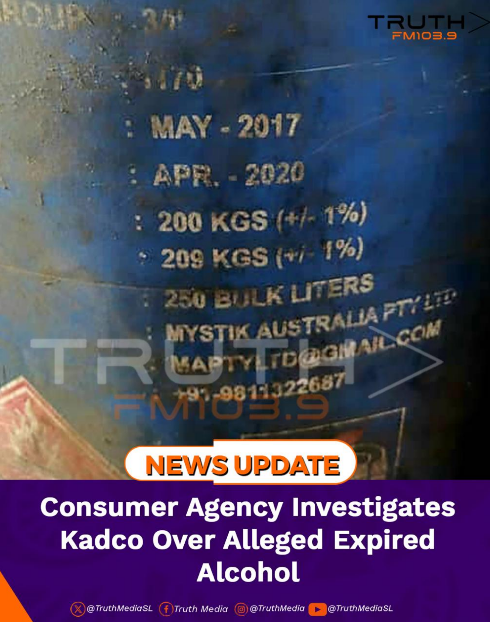
NCPA officials say they fear prolonged investigations could endanger public safety if the chemicals are not destroyed promptly. Over 300 barrels of ethanol, manufactured in May 2017 and expired since April 2020, were initially discovered at Kadco’s store. However, during a follow-up inspection, only 47 barrels remained.
“Following a tip from consumers of Kadco’s alcoholic products, our team visited the site on 5th December 2025 and recorded over 300 barrels of expired ethanol. In our follow-up, only 47 barrels were left,” said Edward Komeh, Deputy Executive Director of NCPA.
Komeh explained that the Agency wrote a formal complaint to the Commission, leading to the formation of a joint committee. He added that Kadco has yet to provide key documents, including the Bill of Lading, to verify the quantity of ethanol imported. “We reminded them on 8th January, and that’s when my staff discovered the drastic reduction in barrels,” he noted.
Responding to allegations of siding with Kadco, Lawrence Bassie, CEO of NCPC, confirmed receiving NCPA’s complaint and setting up the committee on 17 December 2025.
“This process takes time. We gave Kadco until 12 January to provide the requested documents. The agency demanded immediate inspection, so I accompanied them to the warehouse,” Bassie said.
On Wednesday, Bernadette Ballay Fullah, NCPC’s Consumer Relations Manager, told Truth Media that Kadco has now submitted the documents and a meeting will be held to review them. She added that the Standards Bureau will conduct laboratory tests on the ethanol before informing the public of the results.
At a press conference, Kenneth David Kamara, Senior Laboratory Analyst at the Standards Bureau, clarified that ethanol itself does not expire. “What expires is its regulatory compliance or fitness for intended use. If it is not fit, it must be disposed of,” he explained. Samples will be collected for analysis this week.
Bassie further alleged that NCPA had long known about the ethanol’s expiration. “It’s only now they are bringing it to our attention. The Commission is not here to protect Kadco; we are here to protect citizens and ensure safety,” he said.
Reached for comment, Joseph Musa, Kadco’s PR representative, declined to go into detail. “The matter is under investigation and being handled by the Commission,” he said.
Despite assurances, NCPA remains worried about the potential production and distribution of alcoholic products made from the expired ethanol. “We are concerned about consumer safety, especially with the barrels dropping from over 300 to just 47,” Komeh stressed.
The investigation continues, with results from the Standards Bureau expected soon.
Developing Story…