Freetown, 10th November, 2025– As the Intergovernmental Negotiations for the United Nations Framework Convention on International Tax Cooperation begin today, the Budget Advocacy Network (BAN) Sierra Leone is calling for urgent reforms to global tax rules that it says unfairly disadvantage resource-rich countries like Sierra Leone.
BAN warns that the current international tax system enables multinational corporations to shift profits abroad, depriving Sierra Leone of critical revenue needed for public services such as health, education, infrastructure, and social protection.
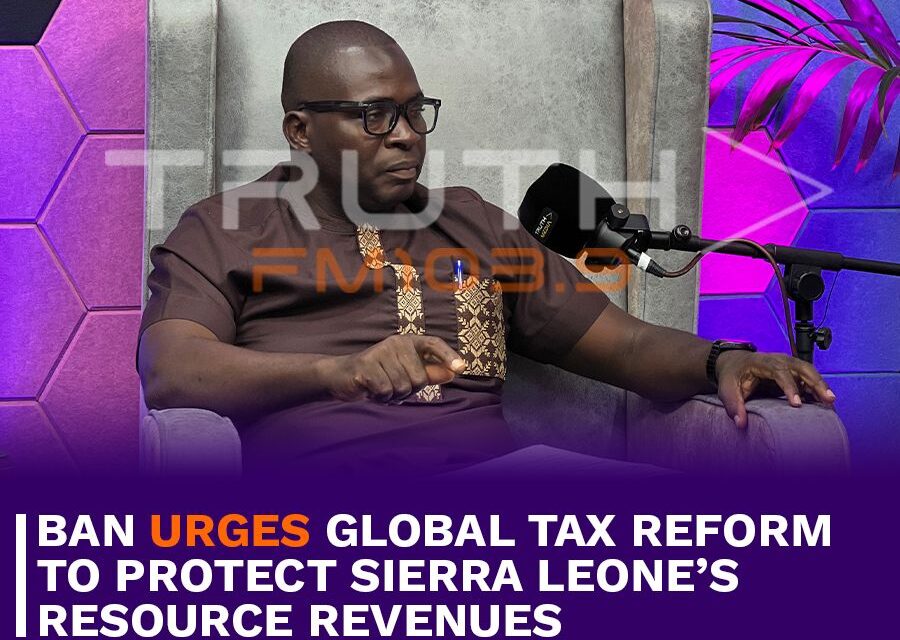
“When our natural resources are extracted, the wealth generated should benefit the people of Sierra Leone first,” says BAN Coordinator Abu Bakarr Kamara. “Yet the current tax rules allow multinational companies to move profits abroad, while our communities live beside abandoned mining pits, poor roads, and underfunded hospitals and schools. This is not development, it is exploitation.”
Despite its mineral wealth, Sierra Leone continues to lose substantial revenue due to weak bilateral tax treaties, outdated global norms, and limited taxing rights. Under the prevailing system, taxing authority is largely granted to the countries where multinational corporations are headquartered, rather than where extraction takes place.
BAN is urging negotiators at the UN Tax Convention to adopt reforms that include:
Taxing resource profits at the point of extraction, not in foreign financial centers. Implementing unitary taxation with formulary apportionment, treating multinational groups as single entities and allocating profits based on real economic activity in Sierra Leone.
It further urges replacing outdated bilateral tax treaties with a transparent, multilateral framework that protects developing countries’ revenue and ensuring civil society participation and transparency in tax policy and negotiation processes.
BAN emphasized that fair taxation is not merely a technical issue, but a matter of national dignity and sovereignty.
“We cannot continue to export wealth while our people live in poverty,” the Coordinator added. “Tax justice is about fairness, it’s about reclaiming what belongs to our citizens.”
The call comes as global leaders gather to negotiate a new framework for international tax cooperation, with hopes that developing nations will gain stronger footing in shaping equitable tax policies.