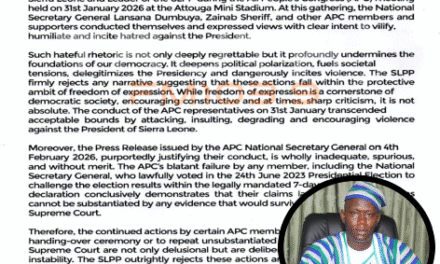
Freetown, 16th February, 2026 – The National Secretary General of Sierra Leone’s main opposition party, the All Peoples Congress (APC), Lansana Dumbuya Esq., is expected back in court today after spending the weekend in remand at the Pademba Road Maximum Correctional Centre.
Dumbuya, a lawyer with over 25 years of practice, was denied bail last Thursday when he first appeared before Magistrate Mustapha Brima Jah at Court No. 1, Pademba Road. He faces three criminal charges filed by the Criminal Investigation Department (CID): incitement, insulting conduct, and public insult against President Julius Maada Bio.
The charges stem from remarks allegedly made at an APC rally on January 31, 2026, where Dumbuya accused President Bio of “stealing” the 2023 elections. Prosecutors argue the comments were capable of inciting disorder, while the defence insists they fall within the bounds of lawful political expression and democratic dissent.
Despite strong submissions by his legal team invoking constitutional protections and the Criminal Procedure Act, Magistrate Jah ordered Dumbuya’s remand. The decision has stirred debate across political and civil society circles, with APC supporters describing it as an attempt to silence opposition voices. On Thursday, the courtroom and courtyard were filled with APC members showing solidarity, while Dumbuya himself appeared composed, even smiling as he stood in the dock.
The development comes just days after the Political Parties Regulation Commission (PPRC) lifted a brief suspension of the APC, following the party’s payment of fines. The timing has added to political tensions, with critics questioning whether the prosecution of the party’s chief administrator is linked to broader efforts to constrain opposition activity.
Today’s hearing is expected to determine whether bail will be reconsidered and how the case will proceed. For APC supporters, the appearance is more than a legal matter, it is a test of Sierra Leone’s democratic space and the balance between political accountability and freedom of expression.