By Davida Spaine Solomon
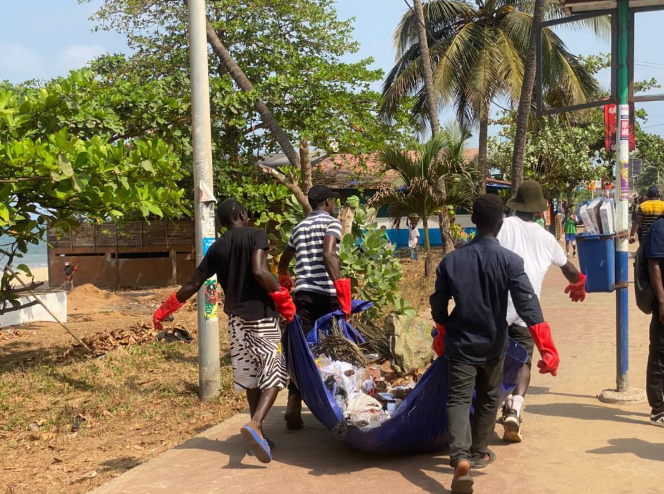
Freetown, 7th April 2026— With the Easter crowds gone, stakeholders in Sierra Leone’s tourism and environmental sectors have turned their attention to the aftermath mounting plastic waste along Lumley Beach, one of the country’s busiest coastal stretches.
On Saturday, a large-scale clean-up exercise was carried out as part of the annual Go Circular Week campaign, highlighting the persistent challenge of waste pollution and the need for sustained action beyond peak holiday periods.
The initiative, implemented under the Sierra Leone Economic Diversification Project with support from the World Bank through its PROBLUE programme, promotes a circular approach to waste reducing, reusing and recycling plastics while encouraging long-term behavioural change.
Mohamed Bah, Planning and Development Officer at the National Tourist Board, said the exercise reflects a growing concern over the volume of waste left behind after major public holidays, particularly along the Lumley–Aberdeen coastline.
“After events like Easter, we often see an increase in plastic waste along our beaches,” Bah said. “This clean-up is not just about removing debris it’s about reminding the public that our actions have lasting consequences on the environment.”
He noted that much of the waste found along the shore originates inland, carried through drainage systems into the ocean before washing back onto the beaches, compounding the problem.
According to Bah, the clean-up is part of a broader effort to engage communities and reinforce the importance of proper waste disposal and environmental responsibility.
Representing the World Bank, Green Label Manager Mathew Short said the campaign is designed to shift perceptions about plastic waste and promote practical solutions.
He explained that plastics collected during the exercise will be recycled into useful materials, including construction products such as bricks, instead of being discarded.
Short warned that plastic pollution is not only an environmental issue but also an economic and public health concern.
“Marine life is increasingly affected, with fish ingesting plastics and fishermen pulling up waste in their nets,” he said. “This directly impacts livelihoods and food security.”
He added that preserving Sierra Leone’s natural beauty is essential for sustaining tourism and urged citizens to take greater responsibility for protecting the country’s coastline.
As part of efforts to sustain regular clean-up activities, the Go Circular project donated essential tools including rakes, wheelbarrows and shovels to the National Tourist Board.
Project representative Amera Bah said the equipment is intended to support continuous sanitation efforts and ensure that clean-up activities extend beyond periodic campaigns.
Officials receiving the items on behalf of the Ministry of Tourism and Cultural Affairs expressed appreciation to the World Bank and its partners, pledging to use the tools to maintain cleaner, more attractive beaches.
Even as the immediate post-holiday waste is cleared, stakeholders say the larger challenge remains: changing public attitudes and building a culture of responsible waste management to protect Sierra Leone’s coastline year-round.