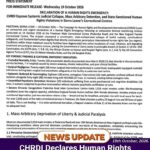
Freetown, 19th October 2026– The Campaign for Human Rights and Development International (CHRDI) has declared what it describes as a “human rights emergency” following a monitoring mission that uncovered alleged overcrowding, prolonged detention without trial, preventable deaths, and serious health challenges at Sierra Leone’s main correctional facilities.
The rights organisation said its forensic monitoring mission, conducted on October 14, 2026, at the Freetown Male Correctional Centre, commonly known as Pademba Road, and the New England Female Correctional Centre, revealed what it called a systemic breakdown of lawful custody, constitutional safeguards and human dignity.
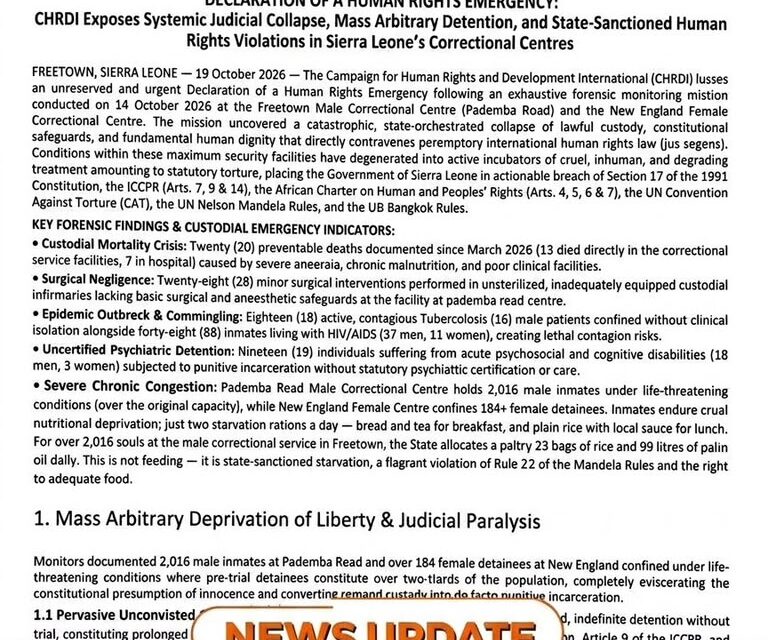
According to CHRDI, monitors documented 20 preventable deaths since March 2026, including 13 deaths within correctional facilities and seven in hospitals. The organisation attributed the deaths to severe anaemia, chronic malnutrition and inadequate clinical services.
The group further alleged that 28 surgical procedures had been carried out in inadequately equipped infirmaries lacking basic surgical and anaesthetic safeguards at the Pademba Road facility. It also reported that 18 inmates with active tuberculosis were being housed without clinical isolation alongside 48 inmates living with HIV/AIDS, creating what it described as significant public health risks.
CHRDI stated that 19 individuals suffering from psychosocial and cognitive disabilities were being held in custody without psychiatric certification or adequate care.
The organisation reported that the Pademba Road Male Correctional Centre currently holds 2,016 inmates, while the New England Female Correctional Centre houses more than 184 female detainees. According to the report, the majority of those detained at Pademba Road are awaiting trial rather than serving sentences.
CHRDI claimed that more than 1,000 unconvicted individuals remain in prolonged detention without trial, while 481 inmates are allegedly being held without formal indictment. The group also reported that 108 inmates have experienced trial delays dating back to 2016 and that 172 remand detainees have been awaiting committal proceedings since 2020.
The report further alleged that 21 drug-related suspects placed in “safe custody” by the Transnational Organised Crime Unit (TOCU) were being detained without prompt judicial authorisation, legal representation or access to habeas corpus procedures.
CHRDI also raised concerns about the detention of persons unable to pay fines. According to the organisation, more than 25 people remain incarcerated because of unpaid minor fines, including four individuals reportedly detained for over six months without judgment over a Le4,000 fine. The group also cited the case of a woman who is expected to complete her custodial sentence but would remain imprisoned because of an unpaid Le15,000 fine.
At the New England Female Correctional Centre, CHRDI reported discrepancies between official inmate records and physical headcounts. The organisation said official records showed 184 inmates, while physical verification allegedly indicated more than 200 detainees. It warned that such discrepancies raise concerns over unrecorded custody.
The rights group also reported that seven nursing infants and toddlers were being kept with their detained mothers, including three children born while their mothers were in custody. CHRDI argued that such conditions violate international conventions protecting children’s welfare and the rights of incarcerated women.
Commenting on the findings, Abdul M. Fatoma, Chief Executive of CHRDI, described the situation as a humanitarian and human rights crisis.
“What CHRDI has forensically documented across Freetown’s correctional centres is not merely institutional negligence; it is an active, state-tolerated humanitarian and human rights crime,” he stated. “Locking nursing infants in contaminated cells, warehousing citizens for a decade without trial, and abandoning contagious patients without medical care constitute actionable State liability under domestic and international law.”
In response to the findings, CHRDI issued a series of recommendations to the Government, Judiciary, Ministry of Justice, Ministry of Internal Affairs, Ministry of Health and the Sierra Leone Correctional Service (SLCS). These include an independent audit of correctional facilities, emergency court sessions to review prolonged detention cases, the release or bail of detainees accused of minor non-violent offences, the transfer of nursing mothers and children to appropriate welfare facilities, improved healthcare interventions, and enhanced welfare support for correctional officers.
The organisation also called for the immediate release of inmates detained solely because of unpaid minor fines and urged authorities to expand non-custodial sentencing measures such as probation and community service to ease prison congestion.
CHRDI said the findings place renewed attention on prison congestion, access to justice, healthcare provision and the treatment of vulnerable detainees within Sierra Leone’s correctional system, and urged authorities to take immediate action to address the issues raised.