Freetown, 30th September, 2026– The Bank of Sierra Leone has tightened monetary policy, raising the Monetary Policy Rate (MPR) by 0.25 percentage points to 17.25 percent, in response to persistent inflationary pressures and a slowing domestic economy.
The decision was taken by the Monetary Policy Committee (MPC) at its meeting on September 24, chaired by Governor Dr. Ibrahim L. Stevens, and later approved by the Board of Directors on September 28.
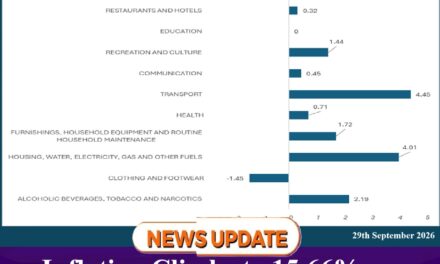
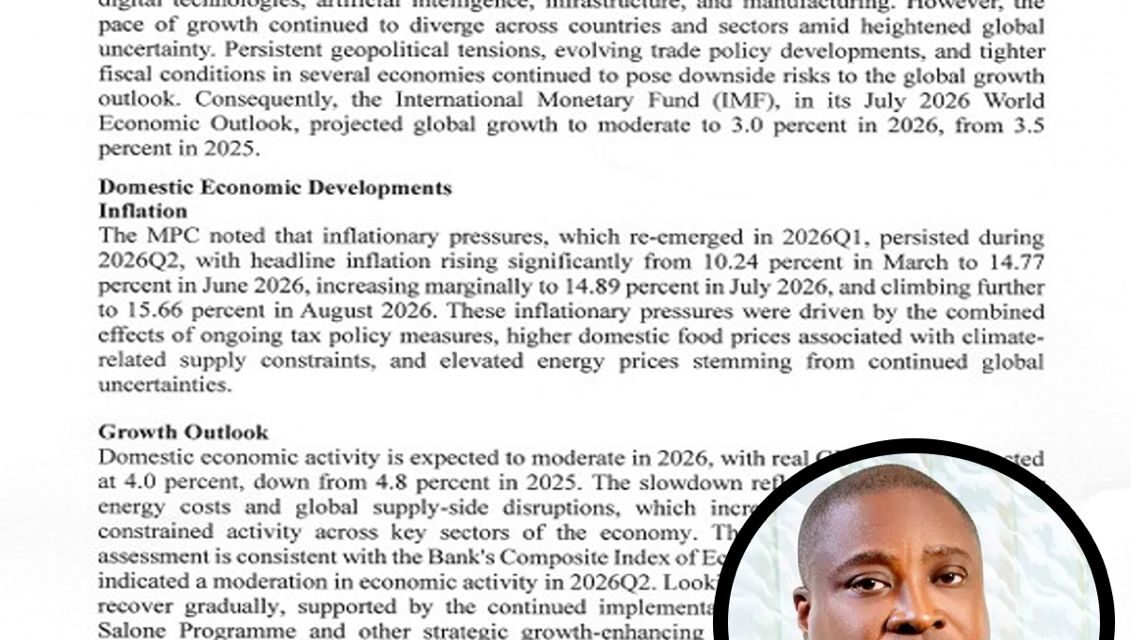
The move reflects the Committee’s concern over rising consumer prices, with headline inflation climbing from 10.24 percent in March to 15.66 percent in August 2026. The surge has been driven by tax policy measures, higher food costs linked to climate-related supply constraints, and elevated global energy prices.
“Risks to the inflation outlook remain tilted to the upside,” the MPC noted, stressing the need to anchor expectations and preserve macroeconomic stability.
Growth slowdown: Real GDP growth is projected at 4.0 percent in 2026, down from 4.8 percent in 2025, reflecting higher energy costs and global supply disruptions.
External sector: Sierra Leone’s trade deficit widened in Q2 2026 as export earnings fell and import bills rose. Gross international reserves increased modestly but declined in coverage to 1.8 months of imports, from 2.1 months in Q1.
Fiscal pressures: The overall budget deficit expanded in Q2 due to higher capital spending and goods and services outlays, despite improved domestic revenue mobilisation.
Credit expansion: Commercial banks’ lending to the private sector grew by 52.2 percent, surpassing the IMF programme target of 39.40 percent. The MPC urged that credit be directed toward productive sectors to support investment and job creation.
Banking sector stability: The financial system remained broadly resilient, though the Non-Performing Loan (NPL) ratio rose to 10.2 percent, breaching the regulatory ceiling of 10.0 percent. The Committee called for stricter credit management and enhanced internal controls.
The MPC emphasized vigilance and readiness to recommend further measures should inflationary pressures intensify. The next meeting is scheduled for December 17, 2026.