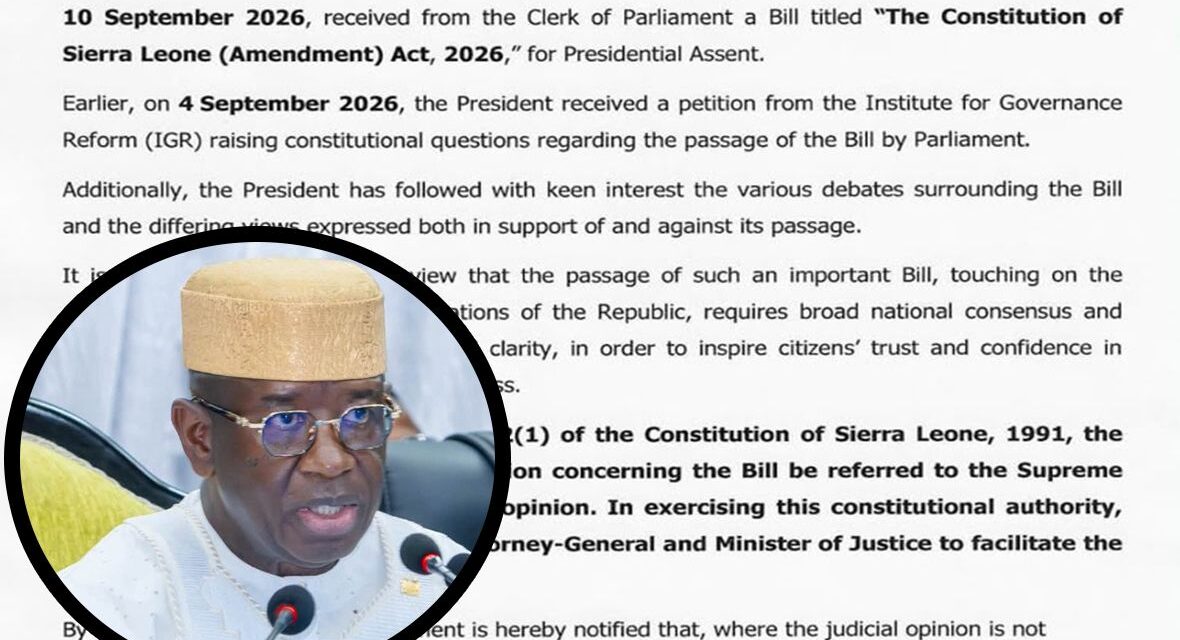
Freetown, 14th September, 2026 – President Julius Maada Bio has taken the unprecedented step of referring the recently passed Constitution of Sierra Leone (Amendment) Act, 2026 to the Supreme Court for judicial interpretation, citing the need for constitutional clarity and broad national consensus.
On September 10, the Clerk of Parliament formally transmitted the Bill to State House for presidential assent. However, just days earlier, the President had received a petition from the Institute for Governance Reform (IGR) questioning the constitutionality of the parliamentary process that led to the Bill’s passage.
The proposed amendment has sparked intense public debate, with supporters hailing it as a necessary reform and critics warning of potential threats to democratic safeguards. President Bio, acknowledging the divided opinions, emphasized that any legislation altering the nation’s constitutional foundations must inspire public trust and confidence.
“In matters of profound national importance, diligence, transparency, and fidelity to the constitution are paramount,” the President noted in his directive.
Acting under Section 122(1) of the 1991 Constitution, the President instructed the Attorney-General and Minister of Justice to facilitate the referral of the petition to the Supreme Court. The Clerk of Parliament has been notified that if the Court fails to deliver its opinion within 14 days of the Bill’s presentation, the President’s final decision will be communicated once the judicial opinion is received.
This move marks a rare exercise of presidential authority and underscores Bio’s stated commitment to ensuring that constitutional amendments are not only legally sound but also enjoy national legitimacy.