By Davida Spaine-Solomon
Freetown, 5th August, 2026 – The Deputy Minister of Technical and Higher Education, Sarjoh Aziz-Kamara, has reaffirmed the Government of Sierra Leone’s commitment to overhauling Technical and Vocational Education and Training (TVET), stating that ongoing reforms are designed to equip young people with industry-relevant skills and strengthen the country’s workforce.
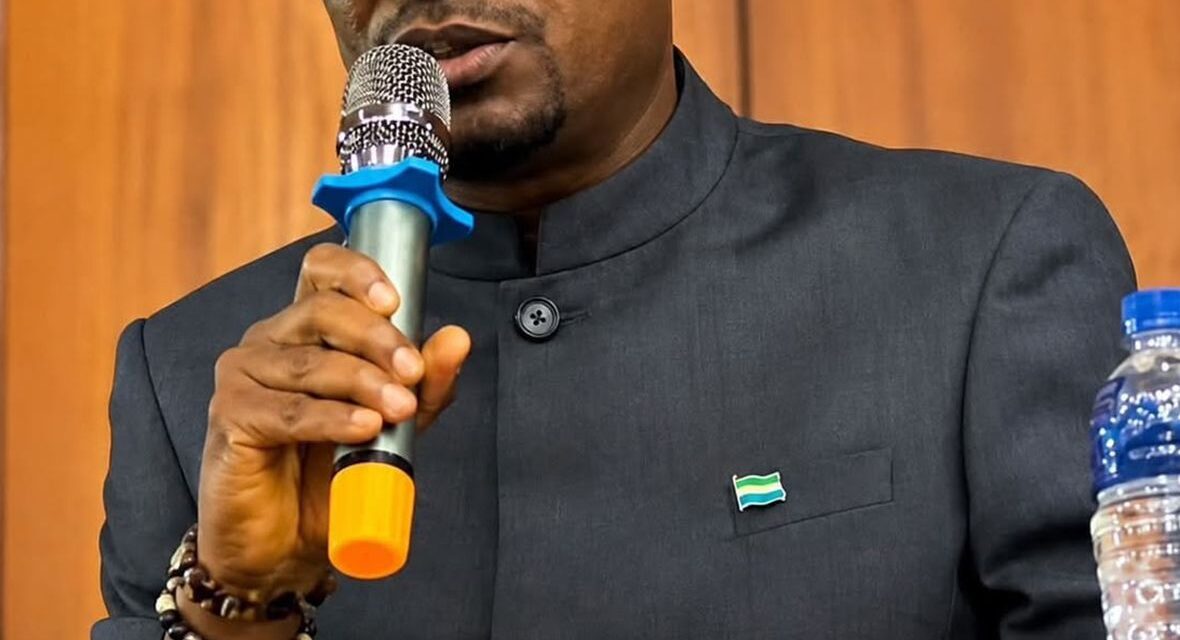
Speaking at the Government’s weekly press conference at the Miatta Conference Centre in Freetown on Tuesday, Aziz-Kamara said the reforms form a key pillar of the Government’s Human Capital Development Agenda, which has reshaped technical and higher education since 2018.
He said the creation of the Ministry of Technical and Higher Education provided a dedicated institution to oversee tertiary education, technical and vocational training, research, innovation, and skills development. He noted that the 2021 Universities Act’s transformed polytechnics into technical universities, increasing the number of public universities from three to six and expanding access to higher education.
Discussing the shift in the education system, the Deputy Minister stated that the Government has shifted from a certificate-based education system to a competency-based model that responds to labour market demands. He cited the 2019 National TVET Policy, the Skills Development Fund, and nationwide labour market surveys as key initiatives driving curriculum reforms in priority sectors, including agriculture, mining, construction, ICT, manufacturing, tourism, and hospitality.
Aziz-Kamara said Government Technical Institutes are being expanded across all 16 districts, with plans to upgrade them into community colleges. He also announced plans to introduce a Dual Apprenticeship Policy that would combine classroom learning with workplace experience, alongside a National Qualifications Framework to provide structured pathways from entry-level and technical training to advanced professional qualifications.
Explaining Government’s continuity to prioritize education in the sector, he stated that Government is allocating about 22 percent of the national budget, subsidising public universities, and supporting staff salaries, stressing that these investments must translate into graduates with practical and employable skills.
The Deputy Minister underscored the importance of stronger partnerships with the private sector to ensure training programmes meet industry needs. He also cautioned students against enrolling in unaccredited institutions and disclosed plans to establish Centres of Excellence in specialised fields such as renewable energy and agro-processing, while expanding flexible learning opportunities through micro-credentials and credit transfer systems.
Speaking on examination malpractice, Aziz-Kamara described the practice as “organised crime” and reiterated the Government’s zero-tolerance stance, adding that the digitisation of examinations will improve transparency and reduce opportunities for cheating.
He further revealed that the first phase of the Government’s US$20 million Skills Development Project trained more than 20,000 beneficiaries, surpassing its initial target of 8,000. The next phase, he said, would deepen private sector participation to ensure skills development remains aligned with labour market needs.
Concluding, Aziz-Kamara called on universities to regularly review their academic programmes to reflect emerging national priorities, including agriculture, industrialisation, technological innovation, and artificial intelligence. He urged government institutions, the private sector, development partners, educational institutions, the media, parents, and civil society to work together to develop a skilled workforce capable of driving Sierra Leone’s long-term economic growth.