As Sierra Leone hosts the ECOWAS Summit, the country’s latest political decision raises questions far bigger than the return of a former President.
By Ahmed Sahid Nasralla (De Monk)
Freetown, 20th July 2026- Sometimes history doesn’t announce itself with marching bands or dramatic speeches, but with a quiet legal document filed in court, a parliamentary vote, or a political decision whose full meaning only becomes clear with time.
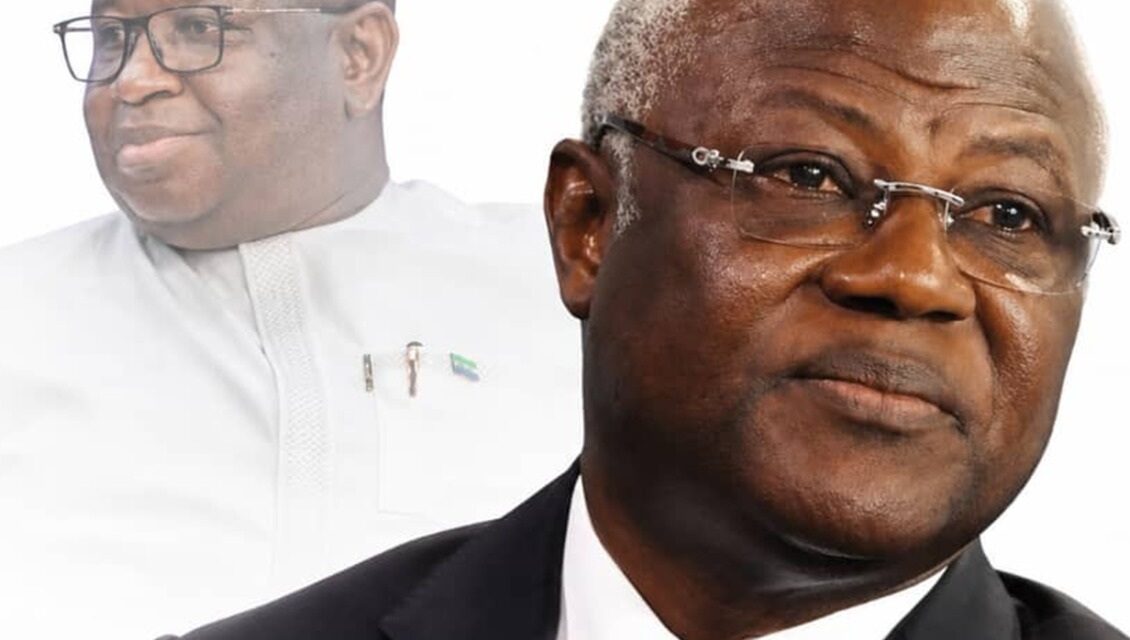
The decision to discontinue the criminal proceedings against former President Ernest Bai Koroma may prove to be one of those moments.
It is not because of what was done, but because of when it was done.
As Sierra Leone hosts one of the most consequential ECOWAS gatherings in recent years and prepares to welcome regional leaders to Lungi, the Government has cleared the way for former President Ernest Bai Koroma to return home from Nigeria, where he has remained since leaving the country under an ECOWAS-mediated arrangement following the November 26, 2023 attempted coup.
I don’t think it is the timing that has inevitably fuelled the debate. Some have praised the decision as an act of political maturity, reconciliation and statesmanship. Others worry about the implications for justice, accountability and public confidence in the rule of law. Both reactions are understandable. But, may be, the most important question lies elsewhere.
What kind of Sierra Leone are we trying to build? That question is bigger than both Ernest Bai Koroma and President Julius Maada Bio. It is even bigger than the notorious SLPP and APC. It goes to the heart of the kind of democracy we hope to leave behind.
Until this week, the term, ‘nolle prosequi’ was a Latin phrase familiar mainly to lawyers and judges. Today, it has entered everyday conversation. Some have mistaken it for an acquittal. Others have described it as a pardon. As the erudite lawyer during a Truth Media program on the issue of EBK’s return puts it, it is neither.
A nolle prosequi simply means that the prosecution (in this case, the State) has decided not to continue with the criminal proceedings before the court. It brings those proceedings to an end, but it is not a judicial declaration that the accused is innocent, or the case is closed forever. That distinction matters. Law and politics often intersect, but they are not the same thing.
As this commentary was being finalised, Parliament this morning unanimously adopted the instrument laid before it by the Attorney-General and Minister of Justice, paving the way for the discontinuation of the proceedings against the former President. The parliamentary resolution also provides for compensation to the families of the service men and women who lost their lives defending the country during the November 26 attempted coup.
Taken together, these developments suggest an effort to pursue legal closure while recognising the human cost of the events that brought Sierra Leone to this point.
Justice and reconciliation have always been uneasy partners. Every nation emerging from political crisis eventually reaches the same uncomfortable crossroads.
How far should justice go if it risks reopening political wounds? How much compromise is acceptable if it helps preserve peace? There are no simple answers to those questions.
South Africa wrestled with similar questions after apartheid. Liberia confronted them after years of civil war. The Gambia continues to navigate them following the departure of Yahya Jammeh. Kenya faced similar tensions after the post-election violence of 2007 and 2008. Even us, Sierra Leone, still grapple with them after the 11 years rebel war.
None of those countries, including Sierra Leone, found a perfect formula. Each tried to balance accountability with national stability. Sierra Leone is now confronting another version of that challenge.
Amid the legal arguments and political calculations, there is another constituency whose voices deserve equal attention, and this has been raised by Dr. Sylvia Blyden, and subsequently other commentators. The families of the soldiers and security personnel who died defending the constitutional order. The civilians affected by the violence. For them, this debate is more personal than political and constitutional.
Parliament’s decision to provide compensation to the families of those who lost their lives acknowledges that reconciliation cannot ignore sacrifice. Whether compensation alone is enough is a matter on which opinions will differ, but recognising those families as part of the national conversation is an important step.
Justice is not measured only by court proceedings. It is also measured by whether a nation remembers those who paid the highest price.
Whether by coincidence or careful calculation, this decision has arrived as Sierra Leone welcomes the attention of West Africa.
As Chair of ECOWAS, President Bio assumes a leadership role at a time when constitutional order, democratic governance and political stability remain among the region’s greatest concerns.
Against that backdrop, the decision to facilitate the return of a former Head of State inevitably carries significance beyond Sierra Leone’s borders. Supporters see confidence. Critics see inconsistency. Others see political pragmatism. History, as always, will deliver its own verdict.
I beleieve the greatest lesson lies elsewhere. A point to take is that power is only borrowed. African politics has a remarkable way of reminding leaders that power is temporary. Today’s President eventually becomes a former President. Today’s political opponent may become tomorrow’s negotiating partner. The politician who signs executive orders today may one day depend upon the institutions he once led.
Ernest Bai Koroma knows this. Julius Maada Bio knows this. Every future President should remember it. Constitutions outlive governments. Institutions outlive personalities.
The debate in Parliament today also revived memories of another constitutional episode, the removal of a sitting Vice President during the Koroma administration. Calls by the Leader of Government Business for that action to be regarded as an aberration rather than a precedent are a reminder that constitutional democracies mature by learning from controversial practices. A nation grows stronger when it has the courage to admit that some chapters of its history should serve as lessons rather than templates.
Now, let us look beyond today’s headlines. By the time the ECOWAS Summit concludes, the visiting delegations will have departed. The motorcades will disappear. The conference halls will empty. The headlines will change. What will remain is the standard Sierra Leone chooses for itself.
Can we pursue reconciliation without abandoning accountability? Can we uphold justice without becoming prisoners of vengeance? Can we disagree politically without treating every opponent as a permanent enemy? These questions are not for the politicians alone. They belong to every Sierra Leonean. May be, then, the biggest story is not that Ernest Bai Koroma is coming home. It is what his return asks of him, and more importantly, what it asks of the rest of us.
The legal documents will eventually be archived. The parliamentary debates will end. The ECOWAS Summit will pass into history. But the choices Sierra Leone makes today; how it balances justice with reconciliation, constitutional principle with political pragmatism, and accountability with national stability, will continue to shape the country long after today’s headlines have faded.
That, more than the return of Ernest Bai Koroma, is the story that deserves our attention.