By Mohamed Jaward Nyallay
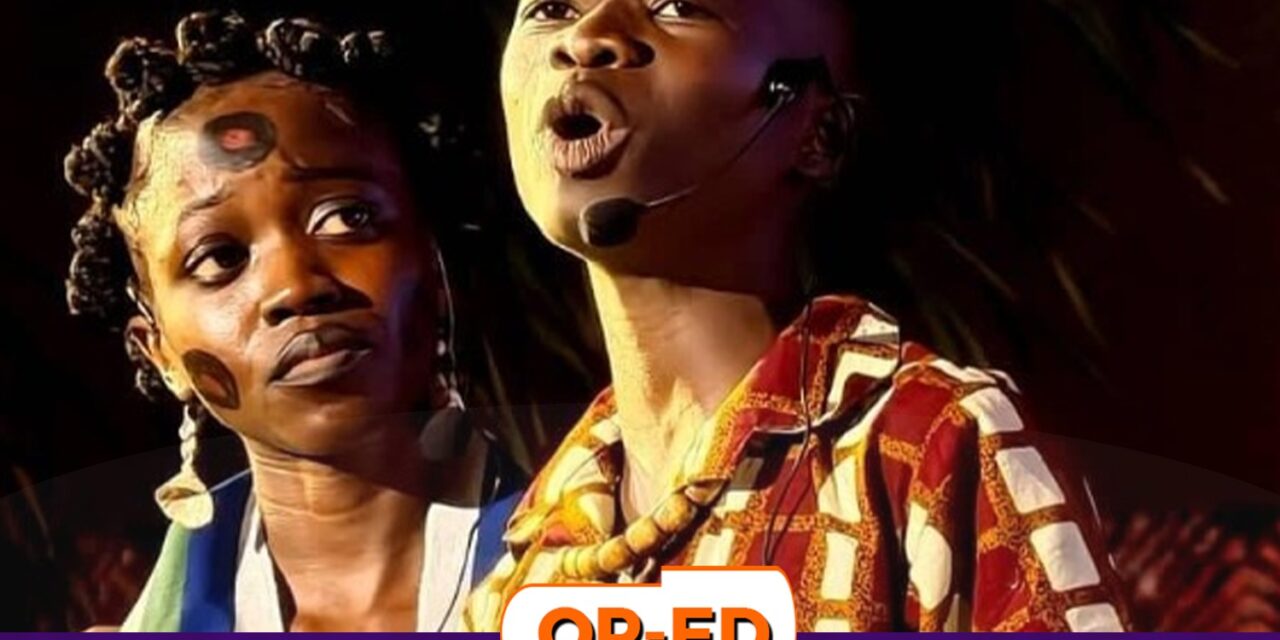
Freetown- This weekend at the Bintumani Auditorium, I experienced Song of Njama—a play written by Dori Turay and directed by Bilal Jalloh (BJ). I was watching it for the first time. It was brilliant. From the dancers and actors to the drummers, music director, and costume team, every contributor shone brilliantly, weaving together a performance that felt both intimate and universal.
Though I am no performing arts expert, I was deeply moved as an audience member. Song of Njama is more than a play; it is a reflection of us all. It embodies our heritage, our struggles, and our joys. Its storytelling rekindled childhood nostalgia—games like “balance ball,” hide-and-seek, and the carefree innocence of village life. I saw myself in those children, recalling evenings in Freetown when my mother chased me to lessons while I schemed with friends. That sense of shared memory made the scenes glow with familiarity and warmth.
The love story of Makai and Aminata was especially compelling. Makai’s dream of becoming a carpenter, like the father he never met, revealed both admiration and pride in a noble profession. His devotion to Aminata carried themes of sacrifice and dignity, yet their romance was tragically cut short—separated by the ocean, never to reunite. Their story left me pondering the future they might have built together. Destiny, however, brought their children together years later, who fell in love and returned home to break the curse of Zimma.
The symbolism of the scarf was profound. In Sierra Leonean tradition, country cloth represents resilience, pride, and love. Passed down through generations, it stands as a living testament to our culture, making it a fitting emblem of Njama.
Colonialism also emerged as a powerful theme. Zimma, the wicked goddess, was more than a villain—she embodied colonialism itself, enslaving people, introducing trade, and persuading spirits to open Njama. The play touched on a rarely discussed aspect: the role of African leaders in facilitating the slave trade. Though underexplored, it provoked reflection, especially in today’s global conversations about reparations. The actor portraying Zimma delivered a commanding performance, perfectly cast by Director BJ.
Ultimately, Song of Njama succeeds because it is deeply rooted in the Sierra Leonean experience. It entertains, educates, and challenges us to confront history while celebrating identity and belonging.
As I left the auditorium, I felt not only inspired but hopeful. Theatre in Sierra Leone is blossoming, with productions of remarkable quality emerging in recent years. Yet, to sustain this revival, we must invest in it. Plays like Song of Njama are resource-intensive, but they are also invaluable—preserving culture, sparking dialogue, and reminding us of who we are.