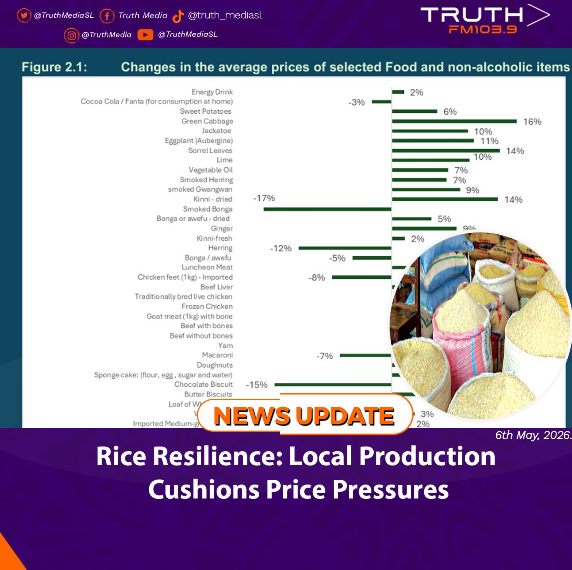
Freetown, 4th May 2026– The latest consumer price data has revealed sharp contrasts in the cost of Sierra Leone’s staple foods, with sweet potatoes climbing 16%, chicken showing modest increases, and rice largely stable. The figures highlight the uneven pressures facing households as food inflation continues to reshape spending patterns.
Sweet potatoes recorded the steepest rise among staples, with a 16% increase in average prices. Supply constraints and seasonal demand have pushed costs higher, making the root crop less affordable for low‑income households that rely on it as a key substitute for rice.
Chicken, a critical protein source, showed moderate increases across categories: imported chicken feet (1kg) rose 7%, frozen chicken climbed 4% and traditionally bred live chicken increased 4%. These gains reflect rising import costs and local supply pressures, adding to household food budgets already stretched by inflation.
Rice, Sierra Leone’s most consumed staple, remained relatively stable: Imported medium‑grained rice rose 2%, imported long‑grained rice also up 2%, imported broken rice increased 4%, local medium‑grained rice edged up 2%, local long‑grained rice fell 4%
The mixed movement suggests that while imported varieties are becoming slightly more expensive, local production has helped cushion overall price pressures.
The divergence in staple prices underscores the fragility of food security. With sweet potatoes surging, chicken edging higher, and rice holding steady, households face a shifting balance in their daily food baskets. As usual the continued reliance on imports leaves Sierra Leone vulnerable to external shocks, while local production gains remain uneven.
The figures show similar volatility across other food items, from vegetables to fish and baked goods. While some products recorded declines, the upward movement in staples signals persistent inflationary pressure in the food sector.
For policymakers, the goal should be stabilizing staple prices through stronger local production, targeted subsidies, and improved supply chain efficiency.