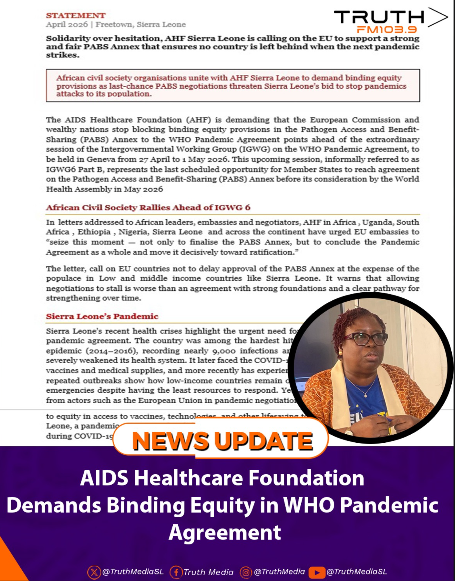
Freetown, 22nd April, 2026- Ahead of the signing of the World Health Organization’s (WHO) Pandemic Agreement, the AIDS Healthcare Foundation (AHF) has joined African civil society groups in demanding binding equity provisions to guarantee enforceable benefit-sharing during pandemics.
At a press briefing held at AHF’s Carlton Carew Road office in Freetown, Country Programme Director Miatta Jambawai Kaisamba declared: “No equity, no agreement. The Pandemic Agreement cannot be ratified without the PABS Annex, and the Annex must not be approved without binding equity provisions guaranteeing enforceable benefit-sharing during pandemics, PHEICs, and interpandemic periods.”
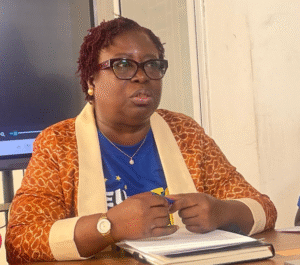
Miatta Jambawai Kaisamba, Country Programme Director, Aids Health Care Foundation
Kaisamba stressed that if countries are expected to share virus samples and data, they must also share the resulting benefits including vaccines, diagnostics, and treatments.
She urged the European Union (EU) to support a strong Pathogen Access and Benefit-Sharing (PABS) Annex, warning that failure to do so risks leaving low- and middle-income countries behind when the next pandemic strikes.
The call comes ahead of the extraordinary session of the Intergovernmental Working Group (IGWG) on the WHO Pandemic Agreement, scheduled for April 27–May 1 in Geneva. Known as IGWG6 Part B, the session is the last opportunity for member states to reach consensus on the PABS Annex before its consideration at the World Health Assembly in May.
AHF offices across Africa, including Uganda, South Africa, Ethiopia, Nigeria and Sierra Leone, have written to African leaders and EU embassies urging them to “seize this moment” to finalize the Annex and move the Pandemic Agreement toward ratification. The letters warn that delaying approval would be more damaging than adopting a strong framework with room for future strengthening.
Sierra Leone’s recent health crises underscore the stakes. The country was devastated by the 2014–2016 Ebola epidemic, recording nearly 9,000 infections and close to 4,000 deaths. During COVID-19, Sierra Leone struggled with limited access to vaccines and medical supplies, and more recently faced a surge in Mpox cases.
Dr. Agnes Bangura, Program Manager at the National Public Health Agency, noted that Sierra Leone has already practiced equity in its outbreak responses. During the Mpox outbreak, limited vaccines were prioritized for healthcare workers, people living with HIV, and men who have sex with men. “As a country, we are practicing equity. We need to take it to the international world so they see this is the way to go,” she said.
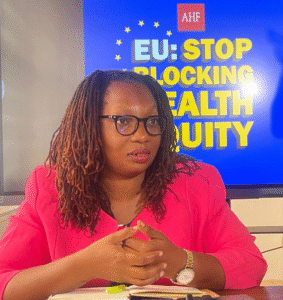
Dr Agnes Bangura, Program Manager, Case Management Program, National Public Health Agency
The inequities of COVID-19 remain fresh. Africa, home to 17% of the world’s population, received less than 3% of vaccines, despite African scientists being among the first to identify and share genomic data on new variants. Critics argue that voluntary benefit-sharing commitments, favored by wealthy nations, lack enforceability.
AHF insists that mandatory benefit-sharing must include guaranteed shares of vaccines, diagnostics, and treatments, technology transfer, annual financial contributions, and public access to non-commercial research outputs. Without standardized contracts and mandatory registration of system users, the organization warns, the benefit-sharing system will lack accountability.
The European Union remains at the center of the impasse. While publicly championing solidarity, the EU alongside Germany, Switzerland, Japan, and Australia has resisted binding equity provisions. AHF argues this position undermines system integrity and risks repeating the “vaccine apartheid” of COVID-19.
Some EU members, including Spain, Belgium, and Luxembourg, have signaled support for stronger equity measures. Advocates believe a shift by key EU states could break the deadlock.
Esther Teh, AHF Sierra Leone’s Prevention and Advocacy Manager, assured the public that national health data would be protected under the agreement and emphasized the importance of public education. She appealed to the media to sustain interest in health reporting, noting that informed coverage benefits the entire population.

Esther Teh, Aids Health Care Foundation, Prevention and Advocacy Manager
With the Geneva talks looming, AHF and African civil society are pressing for a pandemic agreement that prioritizes fairness, accountability, and enforceable benefit-sharing. For countries like Sierra Leone, the stakes are clear; without equity, the world risks repeating the devastating inequalities of past health crises.