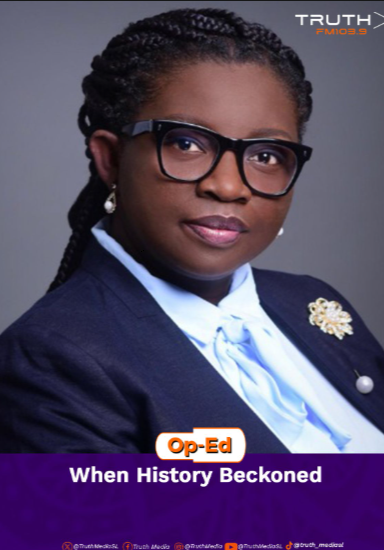
By Khalilah Hackman- Ministry of Foreign Affairs, Ghana
April 9th 2026- After eighty years, the United Nations had finally acknowledged slavery and the transatlantic slave trade as the gravest crime against humanity. The room erupted: 123 in favour, 3 against, 52 abstentions, cheers so loud they swallowed the procedural formalities that followed.
The political mandate behind that vote had been clear and unwavering. In September 2025, during the 80th General Debate, President Mahama of Ghana had stood before the General Assembly and declared Ghana’s intention, embodying the collective memory and moral clarity that has always defined Africa’s continental struggle. Five months later, the African Union’s Assembly of Heads of State formally endorsed the initiative, uniting the continent’s vision from Cape to Cairo. The negotiating team’s marching orders were unambiguous, animated by ubuntu and the enduring belief that no African heals alone. The Minister of Foreign Affairs, Samuel Okudzeto Ablakwa, carried that charge forward with deep conviction.
The Assembly had begun its session with the annual commemoration, with the Secretary-General and President of the General Assembly delivering their customary ceremonial statements, followed by poetry. But Ghana’s delegation and I were distracted, intently monitoring seats and making calls to absent delegations. Every seat counted, every delegation counted, and every vote counted in that moment. All but two African delegations were present.
Just before the vote, I took a position at the back right corner of the Hall, angled toward the Ghana delegation. The Honourable Minister sat there, confident, flanked by his deputy, Hon. James Gakye Quayson, Amb. Ekow Spio-Garbrah, the presidential envoy for reparations, along with other ambassadors and senior state officials. Across the Hall, Jeswuni Abudu-Birresborn, the Facilitator of the negotiation process, Rita Osei, my Co-Negotiator and Emmanuella Agyeman, Ghana’s Third Committee expert, stood at vantage points to monitor proceedings and nicely usher back into the room, delegations who attempted to depart the room. From where I stood, the atmosphere felt charged and singular. What began as a ceremony was shifting into something more consequential. Earlier, President Mahama had delivered a bold statement on behalf of the African Group: “Let it be recorded that when history beckoned, we did what was right for the memory of the millions who suffered the indignity of slavery.”
As raucous cheers rose with hugs and celebration, abstaining delegations offered heated explanations of vote. But that mattered little as the moral compass had shifted beyond their legal arguments.
The Honourable Minister, pleased with the coalition’s success, drew me into a warm embrace. “My lead negotiator! Congratulations.”
I replied in kind. But as the outcome settled, the moment turned surreal. I stood still inside the noise. What had Ghana just done? What had I been part of? The cheers continued around me, and I felt not triumph exactly, but something quieter and heavier. This was history made, and I was at its heart, adorned in my white satin blazer and gold gye nyame lapel pin!
From penning the zero draft to scrubbing the final text with my colleagues and the UN Secretariat, we had forged a connection to those words beyond their formulations. Each paragraph demanded strategic nuance to sidestep political pitfalls. What to keep, what to let go — these were not merely drafting choices. They were choices for Africa’s past, present, and future.
It had taken six rounds of three-hour negotiations with experts from the UN Third Committee, plus an additional session after the silence procedure was finally broken. By that point, my delegation knew the seventh and extra session was merely procedural. We were resolute in holding the line, refusing to yield to arguments that the trafficking in enslaved Africans and racialised chattel enslavement could not be called a crime because the laws criminalizing it did not exist at the time; that it could not be ranked the gravest offence because no hierarchy had been formally established; that we could not reach backwards across centuries to assign legal meaning to historical wrongs. We had heard these arguments before. They were crafted in the same tradition and often by the descendants of the same legal orders that had once codified the enslavement of Africans in the first place.
We clung instead to a deeper truth: what had been done to Africa for four hundred years was not just wrong, it was a crime; not just a crime, but a crime against humanity; and not just that, but the gravest crime against humanity! We proved it was possible to say so by weaving into the text, the Manden Charter, African jurisprudence and the six-century abolitionist tradition showing that “a crime does not rot” and a wrong does not truly heal until it is remedied through acknowledgment and repair.
That conviction was no foolhardy gamble. It had been forged through several hours of intense consultations with legal jurists, historians, researchers, senior diplomats, politicians, and civil society. Through these sustained exchanges, we identified redlines, interrogated textual amendments, and made the behind-the-scenes calls to preserve both the letter and spirit of the resolution. Outside Conference Room 11, the air hummed with urgency as we forged a Global South coalition. Capitals rang with urgent calls, and huddles with African Group experts, G77 + China, GRULAC, GCC and ASEAN countries kept our unified front alive.
Unexpectedly, rallying our Caribbean brothers and sisters demanded extra resolve. They had pioneered the reparations cause decades before this moment, embedding it in the CARICOM 10-Point Plan and carrying it when few others would. Yet Ghana’s bold push initially stirred an ambivalence between the moral fire that had always animated their advocacy and the diplomatic restraint that present multilateral politics demands. In time, truth prevailed. They stood firm, and in doing so elevated the 10-Point Plan from a regional vision to a multilateral beacon, proof that what begins as one people’s cry for justice can, with enough resolve, become the world’s reckoning.
I recall feeling anxious and shaken during the fourth round of consultations, which focused on the historical paragraphs that told Africa’s own story as the proponents of the resolution. The pushback from western delegations was palpable. We were cast as norm-breakers, repeatedly told that a UN resolution was no place for a historical narrative and urged to collapse all six paragraphs into a line or two. Our counterargument held firm that no number of paragraphs could fully capture the experience of enslaved Africans, or the torn continent left behind, yet it was central to the resolution to lay fundamental foundations including, explicit examples of the instruments that codified chattel enslavement, reducing Africans to property and less than human. The reference to the Papal Bull provoked the modern papacy. It remained.
Embedded in the resolution is the gendered architecture of slavery, a dimension, the international community has yet to fully reckon with. Enslavement followed the womb. A child born to an enslaved mother inherited her status regardless of the father’s; the birth canal of the enslaved African woman becoming a passage for generational bondage and biologically produced labour! The two women diplomats, Rita Osei and I who, negotiated this text felt duty bound to champion this dimension in the text, to insist that the resolution name what had so long gone unnamed. Even I, am still grappling with what its formal recognition means for the discourse ahead.
Beyond the tension of those consultations, Africa was extending an urgent invitation to the world to collectively make a bold political, moral, and historical declaration. By naming slavery’s horrors without equivocation, from the Manden Charter’s ancient wisdom to the Papal Bull’s enduring shadow, we did not seek to condemn but to commence. The 123 votes were not an ending. They were a beginning; opening dialogue on reparations, thickening the normative framework from symbolism to acknowledgment, and marking the moment the world agreed that what happened was not merely a tragedy of history but a crime against humanity that demands a response.
I keep returning to the moment of the vote, the noise in that hall, the stillness I felt inside it. Weeks of negotiations, persistence, and resilience had led here. And still, standing at the heart of it, I found myself asking not what we achieved but what have we begun.
The political mandate behind that vote had been clear and unwavering. In September 2025, during the 80th General Debate, President Mahama of Ghana had stood before the General Assembly and declared Ghana’s intention, embodying the collective memory and moral clarity that has always defined Africa’s continental struggle. Five months later, the African Union’s Assembly of Heads of State formally endorsed the initiative, uniting the continent’s vision from Cape to Cairo. The negotiating team’s marching orders were unambiguous, animated by ubuntu and the enduring belief that no African heals alone. The Minister of Foreign Affairs, Samuel Okudzeto Ablakwa, carried that charge forward with deep conviction.
The Assembly had begun its session with the annual commemoration with the Secretary-General and President of the General Assembly delivering their customary ceremonial statements, followed by poetry. But Ghana’s delegation and I were distracted, intently monitoring seats and making calls to absent delegations. Every seat counted, every delegation counted, and every vote counted in that moment. All but two African delegations were present.
Just before the vote, I took a position at the back right corner of the Hall, angled toward the Ghana delegation. The Honourable Minister sat there, confident, flanked by his deputy, Hon. James Gakye Quayson, Amb. Ekow Spio-Garbrah, the presidential envoy for reparations, along with other ambassadors and senior state officials. Across the Hall, Jeswuni Abudu-Birresborn, the Facilitator of the negotiation process, Rita Osei, my Co-Negotiator and Emmanuella Agyeman, Ghana’s Third Committee expert, stood at vantage points to monitor proceedings and nicely usher back into the room, delegations who attempted to depart the room. From where I stood, the atmosphere felt charged and singular. What begun as ceremony was shifting into something more consequential. Earlier, President Mahama had delivered a bold statement on behalf of the African Group: “Let it be recorded that when history beckoned, we did what was right for the memory of the millions who suffered the indignity of slavery.”
As raucous cheers rose with hugs and celebration, abstaining delegations offered heated explanations of vote. But that mattered little as the moral compass had shifted beyond their legal arguments.
The Honourable Minister, pleased with the coalition’s success, drew me into a warm embrace. “My lead negotiator! Congratulations.”
I replied in kind. But as the outcome settled, the moment turned surreal. I stood still inside the noise. What had Ghana just done? What had I been part of? The cheers continued around me, and I felt not triumph exactly, but something quieter and heavier. This was history made, and I was at its heart, adorned in my white satin blazer and gold gye nyame lapel pin!
From penning the zero draft to scrubbing the final text with my colleagues and the UN Secretariat, we had forged a connection to those words beyond their formulations. Each paragraph demanded strategic nuance to sidestep political pitfalls. What to keep, what to let go — these were not merely drafting choices. They were choices for Africa’s past, present, and future.
It had taken six rounds of three-hour negotiations with experts from the UN Third Committee, plus an additional session after the silence procedure was finally broken. By that point, my delegation knew the seventh and extra session was merely procedural. We were resolute in holding the line, refusing to yield to arguments that the trafficking in enslaved Africans and racialised chattel enslavement could not be called a crime because the laws criminalizing it did not exist at the time; that it could not be ranked the gravest offence because no hierarchy had been formally established; that we could not reach backwards across centuries to assign legal meaning to historical wrongs. We had heard these arguments before. They were crafted in the same tradition and often by the descendants of the same legal orders that had once codified the enslavement of Africans in the first place.
We clung instead to a deeper truth: what had been done to Africa for four hundred years was not just wrong, it was a crime; not just a crime, but a crime against humanity; and not just that, but the gravest crime against humanity! We proved it was possible to say so by weaving into the text, the Manden Charter, African jurisprudence and the six-century abolitionist tradition, showing that “a crime does not rot” and a wrong does not truly heal until it is remedied through acknowledgement and repair.
That conviction was no foolhardy gamble. It had been forged through several hours of intense consultations with legal jurists, historians, researchers, senior diplomats, politicians, and civil society. Through these sustained exchanges, we identified redlines, interrogated textual amendments, and made the behind-the-scenes calls to preserve both the letter and spirit of the resolution. Outside Conference Room 11, the air hummed with urgency as we forged a Global South coalition. Capitals rang with urgent calls, and huddles with African Group experts, G77 + China, GRULAC, GCC and ASEAN countries kept our unified front alive.
Unexpectedly, rallying our Caribbean brothers and sisters demanded extra resolve. They had pioneered the reparations cause decades before this moment, embedding it in the CARICOM 10-Point Plan and carrying it when few others would. Yet Ghana’s bold push initially stirred an ambivalence between the moral fire that had always animated their advocacy and the diplomatic restraint that present multilateral politics demands. In time, truth prevailed. They stood firm, and in doing so elevated the 10-Point Plan from a regional vision to a multilateral beacon, proof that what begins as one people’s cry for justice can, with enough resolve, become the world’s reckoning.
I recall feeling anxious and shaken during the fourth round of consultations, which focused on the historical paragraphs that told Africa’s own story as the proponents of the resolution. The pushback from Western delegations was palpable. We were cast as norm-breakers, repeatedly told that a UN resolution was no place for a historical narrative and urged to collapse all six paragraphs into a line or two. Our counterargument held firm that no number of paragraphs could fully capture the experience of enslaved Africans, or the torn continent left behind, yet it was central to the resolution to lay fundamental foundations, including explicit examples of the instruments that codified chattel enslavement, reducing Africans to property and less than human. The reference to the Papal Bull provoked the modern papacy. It remained.
Embedded in the resolution is the gendered architecture of slavery, a dimension that the international community has yet to fully reckon with. Enslavement followed the womb. A child born to an enslaved mother inherited her status regardless of the father’s; the birth canal of the enslaved African woman becoming a passage for generational bondage and biologically produced labour! The two women diplomats, Rita Osei and I, who negotiated this text, felt duty-bound to champion this dimension in the text, to insist that the resolution name what had so long gone unnamed. Even I am still grappling with what its formal recognition means for the discourse ahead.
Beyond the tension of those consultations, Africa was extending an urgent invitation to the world to collectively make a bold political, moral, and historical declaration. By naming slavery’s horrors without equivocation, from the Manden Charter’s ancient wisdom to the Papal Bull’s enduring shadow, we did not seek to condemn but to commence. The 123 votes were not the end. They were a beginning; opening dialogue on reparations, thickening the normative framework from symbolism to acknowledgment, and marking the moment the world agreed that what happened was not merely a tragedy of history but a crime against humanity that demands a response.
I keep returning to the moment of the vote, the noise in that hall, the stillness I felt inside it. Weeks of negotiations, persistence, and resilience had led here. And still, standing at the heart of it, I found myself asking not what we achieved but what we have begun.