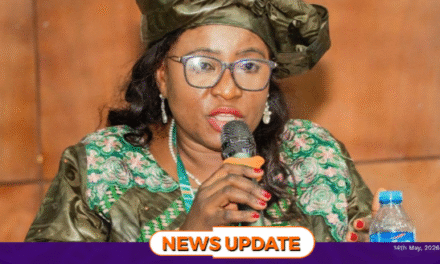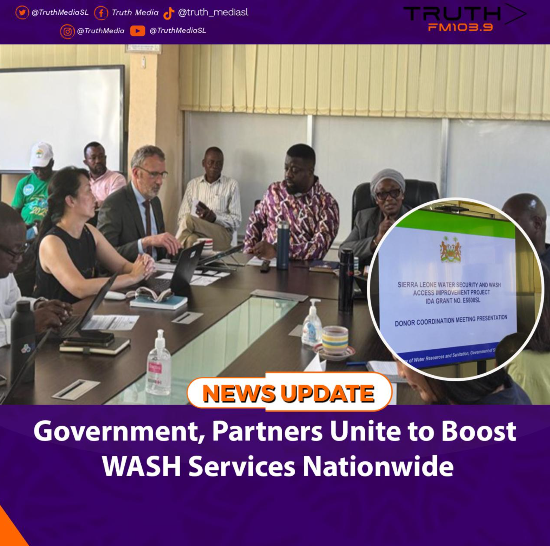
Thursday, 26th March 2026: The Ministry of Water Resources and Sanitation today convened a high-level donor coordination meeting to advance the Sierra Leone Water Security and WASH Access Improvement Project (WASH), with the Hon. Minister, Dr Sao-Kpato Hannah Isatta Macarthy, calling for stronger alignment among partners to improve service delivery across the country.
Opening the session, the Minister outlined the vision of President Dr. Julius Maada Bio’s government for a more coordinated and sustainable WASH sector, while the lead for the World Bank support mission, Xavier Chauvot de Beauchene, reinforced the need for structured collaboration, data sharing, and investment models that enhance long-term impact.
Project Coordinator for WASHIT, Mustapha Gibril, presented key components of the initiative, setting the stage for partner contributions and strategic discussions on the fourth day of the first visit of the implementation support mission by the Bank.
Development partners, including GOAL Sierra Leone, World Vision, UNICEF, WASHNET, CRS, AfDB, WHO, JICA, Concern Worldwide, and others, highlighted ongoing interventions across water supply, sanitation, and hygiene. These ranged from the construction of thousands of water points and climate-resilient systems to innovative approaches such as prepaid water schemes, mobile money integration, and community-led governance models.
The meeting of over 46 partner organizations, implementing agencies and regulatory bodies emphasized sustainability, with a strong focus on capacity building, preventive maintenance, and community ownership, while also flagging challenges such as technical water quality issues, infrastructure gaps in growing urban areas, and the need for improved policy and regulatory frameworks.
Discussions also centered on strengthening coordination mechanisms, with consensus reached on quarterly sector meetings, the creation of a shared information platform, and closer alignment of interventions with national priorities.
The meeting underscored the importance of Public-Private Partnerships, gender-sensitive sanitation solutions, and structured management systems for major infrastructure such as the Feacal Sludge Treatment Plants.
Closing the meeting, the Minister described the dialogue as timely and insightful, urging continuous engagement and information sharing among stakeholders as the sector moves toward more integrated, efficient, and sustainable WASH service delivery.
_________
WASHIT – MWRS
Communications Unit
Freetown, Sierra Leone