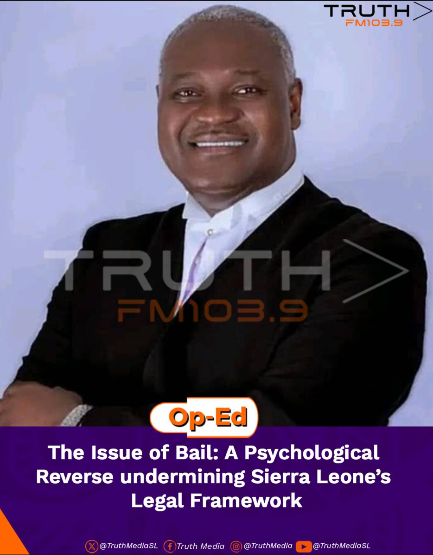
By Joseph Fitzgerald Kamara, Esq
Freetown, 25th March 2026- A troubling shift is taking hold in Sierra Leone’s justice system, one that weaponizes psychology against the very principle of liberty. The right to bail, long enshrined as a cornerstone of justice, is being systematically undermined. What we are witnessing is not merely a procedural delay, but a psychological reverse: a regression where an accused person is presumed custodial until proven innocent.
Historically, bail served two functions: to ensure a defendant’s return to court and to protect the presumption of innocence. However, recent trends, driven by judicial circulars, and high-profile cases, have seen magistrates and judges impose increasingly punitive bail conditions. Cash bail amounts are being set at exorbitant, often unattainable, levels, effectively rendering bail a fiction.
In other instances, bail is denied outright under the guise of “national interest” or “ongoing investigations,” terms that have no statutory basis for pretrial detention.
The psychology behind this reverse is corrosive. For the accused, being held on unaffordable bail or denied bail altogether creates a state of “tortoise” helplessness. It signals that their liberty is not a right but a privilege to be earned through means they do not possess. This erodes public confidence in the judiciary, transforming it from a protector of rights into an instrument of presumptive punishment.
For the legal system, this creates a dangerous feedback loop. Remand centers, already overcrowded and unsanitary, swell with pretrial detainees who may ultimately be acquitted. The psychological message to society is clear: the state no longer distinguishes between accusation and guilt.
This reverse is not just a legal failing; it is a fracture in the social contract. When bail becomes inaccessible, justice is no longer blind, it becomes a weapon for the government and a cage for the opposition. If Sierra Leone is to uphold its constitutional promise, it must urgently reverse this trend, reaffirming that liberty is the rule, and detention the carefully justified exception.