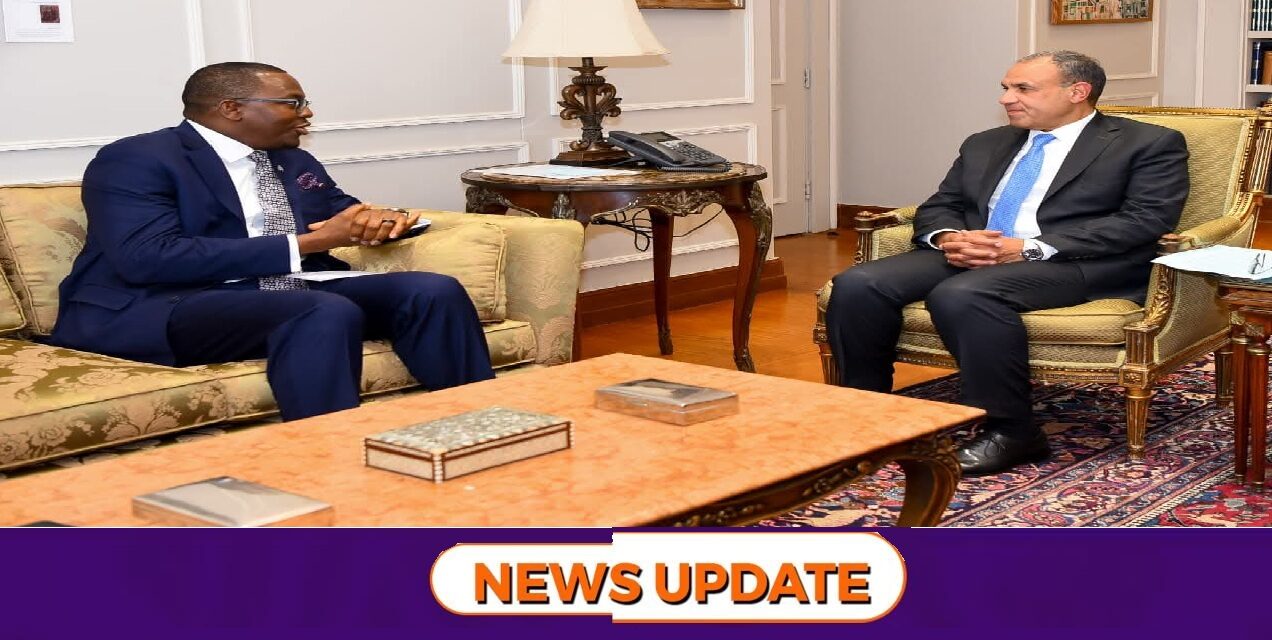
Freetown, 10th February 2026– Calls for reform of the United Nations Security Council gained renewed momentum this weekend, with Egypt’s Foreign Minister Dr. Badr Abdel-Aty underscoring the urgent need to correct what he described as a “historical injustice” against Africa.
At the heart of this diplomatic drive is Sierra Leone, whose Permanent Representative to the UN, Ambassador Michael Imran Kanu, chairs the influential African Committee of Ten (C-10) tasked with advancing the continent’s common position on Security Council reform.
During a meeting in Cairo, Dr. Abdel-Aty praised Sierra Leone’s pivotal role in steering the African agenda, highlighting Ambassador Kanu’s leadership in defending the principles of the Ezulwini Consensus and the Sirte Declaration, the frameworks that define Africa’s demand for fair representation.
Africa’s position is clear: two permanent seats with full privileges, including veto power, and five non-permanent seats in an expanded Council that reflects the continent’s growing influence on global affairs.
Ambassador Kanu has been instrumental in ensuring Africa’s voice remains unified and forceful during intergovernmental negotiations in New York. His stewardship of the C-10 has placed Sierra Leone at the center of one of the most consequential debates in international diplomacy whether the UN’s most powerful body will finally open its doors to Africa’s rightful representation.
For Sierra Leone, this leadership role is more than symbolic. It positions the country as a key advocate for justice and equity on the world stage, amplifying Africa’s demand that the Security Council evolve to reflect today’s geopolitical realities rather than the post-World War II order.