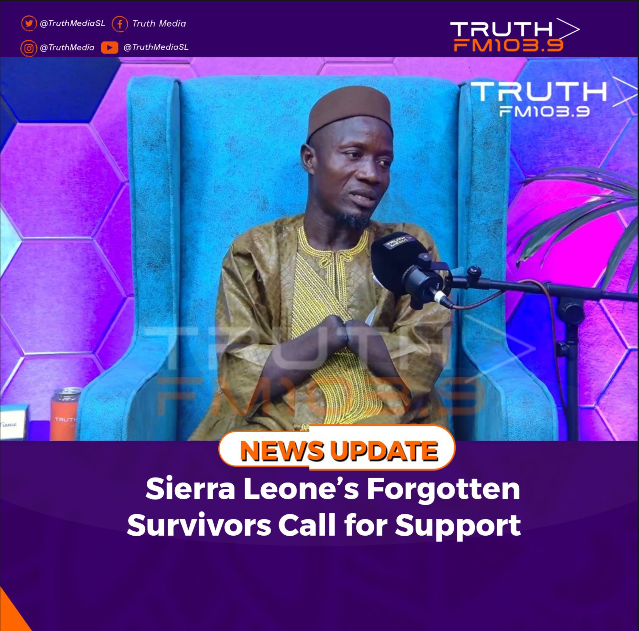
Freetown, 19th January 2026– Twenty-four years after Sierra Leone’s brutal civil war ended, the scars remain etched not only in memory but on the bodies of thousands who lost their limbs. Among them is Mohammed Tarawalie, President of the Amputees and War Wounded Association, who continues to raise his voice for a community that feels abandoned.
Speaking during the Truth Media morning devotion, Tarawalie painted a vivid picture of despair: “It feels like someone who is drowning. Most of the organizations that once helped us have folded up.” His words echo the silent suffering of 2,888 registered and recognized war victims across the country, many of whom have already died due to lack of care.
Tarawalie outlined the community’s most urgent needs, a simple yet powerful list of priorities:
Education for their children: Many survivors’ children have worked hard to meet university requirements, but without scholarships, their dreams remain out of reach. “If they could give scholarships, we would appreciate,” Tarawalie pleaded.
Access to healthcare: With failing bodies and limited resources, the war-wounded know that health is wealth. They ask the government to step in and provide medical support before more lives are lost. The also call for basic welfare support, noting that it could ease the crushing poverty that has defined their post-war existence.
Beyond immediate needs, Tarawalie emphasized the importance of remembrance. Sierra Leone’s annual commemoration day, he said, is not just about honoring the past but about safeguarding the future. “This commemoration will help young people realize what happened during the war and know we cannot go down that road again.”
For Sierra Leone’s amputees, survival has been a daily battle long after the guns fell silent. Their voices are not asking for luxury, but for dignity, for the chance to educate their children, to live with health, and to receive the welfare support that ensures no one is left behind. Their story is a reminder that peace is not only the absence of war, but the presence of care.