By: Andrew Chokpeleh
Freetown, 16th December 2025- During the rainy season, flooding affects many people in Sierra Leone, particularly those living in slum areas and other disaster‑prone communities. The National Disaster Management Agency (NDMA) has made efforts to discourage unsafe settlements, but despite these warnings, many residents continue to live in high‑risk areas, even after the country has experienced serious and devastating natural disasters in the past.
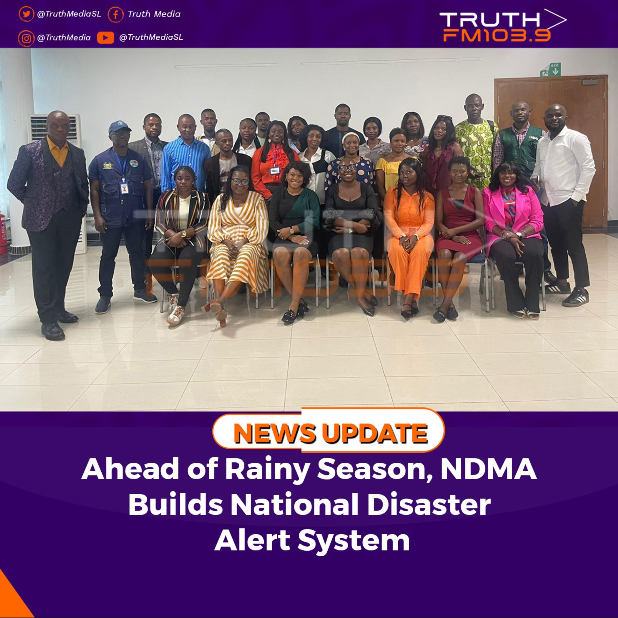
This situation prompted the NDMA to commission a consultancy aimed at developing early warning systems that would help communities across the country anticipate disasters. To share the findings, the agency organized a workshop that brought together participants from different regions to discuss the outcomes.
Madam Hafrique During, the National Consultant, explained that the main objective of the consultancy was to strengthen the NDMA’s work and ensure Sierra Leone does not record devastating floods in the upcoming rainy season. She noted that the study revealed a communication gap between the NDMA and local communities.
According to her, several recommendations were made to bridge these gaps, including addressing the inadequate resources available to the NDMA. She highlighted the need for jingles and other communication materials in local languages to ensure that people who do not understand Krio can clearly grasp the early warning messages. She added that the study found many people often ignore warnings about heavy rainfall, especially when their own communities are not directly affected. “This should not be the case,” she stressed, “as every life in the country matters, including those living in disaster‑prone communities.”
Mr. Daniel Bob Jones, Chairman of a Community Disaster Management Committee, emphasized that human activities such as deforestation, soil erosion, illegal sand mining, and unsafe waste disposal contribute significantly to the occurrence of natural disasters. He explained that while many people view these activities as sources of livelihood, they have severe negative impacts on communities and the country as a whole.
He further noted that persuading someone to leave their farm because of a potential disaster threat is often very difficult, and in some cases almost impossible. However, he said the early warning systems being developed by the NDMA, which communities will eventually adopt, will help reduce disaster risks nationwide. According to him, these systems will also guide community leaders on how best to advise their people when a disaster is likely to occur.
He concluded that the NDMA’s early warning systems would be integrated with local warning mechanisms that communities have already developed for themselves.