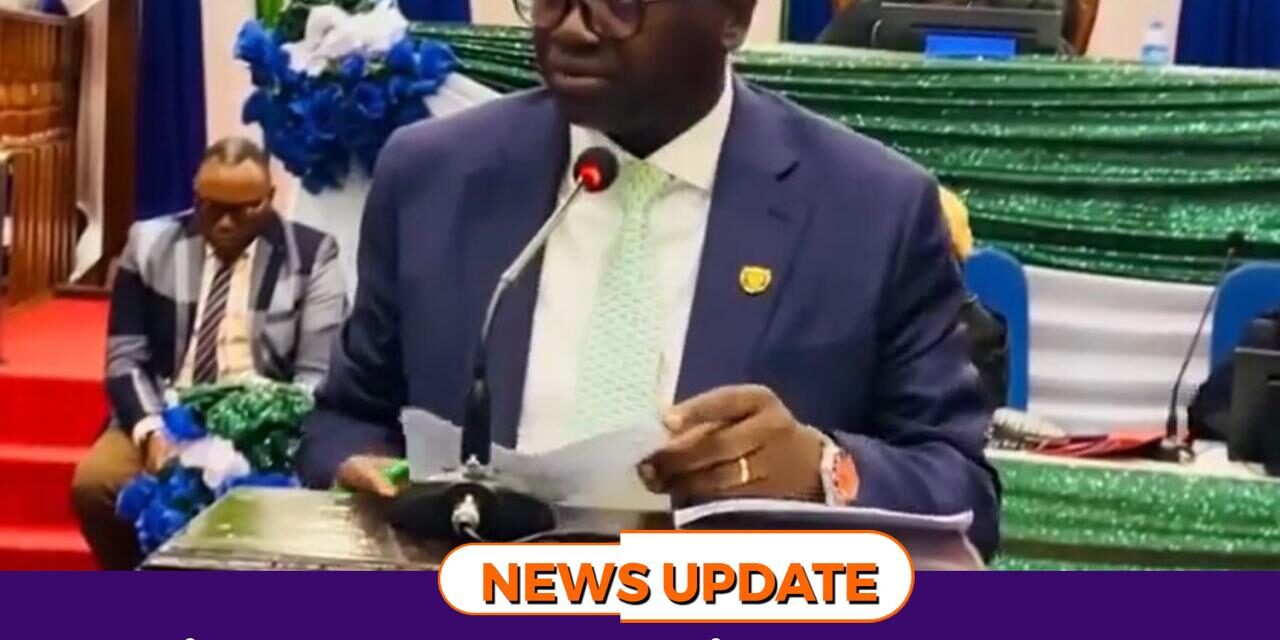
Freetown, 27th November, 2025 – Sierra Leone’s Parliament has enacted the Finance Act 2026, following a heated debate that stretched into the evening session. The legislation, passed with amendments, is designed to strengthen domestic revenue mobilization by revising tax laws and introducing new measures across key sectors of the economy.
Presenting the Bill, Finance Minister Sheku Ahmed Fantamadi Bangura announced that the government aims to generate NLe 2.5 billion in domestic revenue under the new Act. He highlighted specific measures, including: A projected NLe 207 billion in revenue from adjustments in the cement sector, amendments to the Customs Tariff Act of 1978 and the Excise Act of 1982 and an increase in the income tax rate, with amendments to the Income Tax Act of 2000.
He further revealed higher taxation on tobacco products, noting Sierra Leone’s current position as one of the lowest tobacco-taxing countries in the region and adjustments in the petroleum sector, with an exception for petroleum gas to address environmental concerns.
Bangura assured lawmakers that the reforms would improve tax efficiency, strengthen enforcement mechanisms, and enhance the issuance of GST certifications to track financial institutions more effectively.
The Bill drew mixed reactions across the aisle: Hon. Francis Amara Kaisamba, Chairman of the Finance Committee, praised the Ministry for its efforts, noting that the additional 10 Leones per bag of cement would not significantly burden citizens. He emphasized that the government requires substantial resources to deliver electricity, roads, and healthcare.
Hon. Aaron Aruna Koroma, Deputy Leader 2 of the Opposition, warned that increases in cement and fuel prices could impose “fundamental abuse” on citizens. He cautioned that higher costs risk driving up commodity prices nationwide.
Hon. Abdul Karim Kamara, Opposition Whip, described fuel as a “political commodity” and urged government restraint, warning that petroleum price hikes would have widespread economic consequences. He welcomed higher tobacco taxation but called for sensitivity on cement and fuel.
Hon. Saa Emerson Lamina, Countered opposition concerns, stressing that taxation is essential for development and investor accountability. He credited the Finance Ministry with efforts to stabilize inflation and urged MPs to cooperate in raising sufficient revenue.
Hon. Abdul Kargbo, Opposition Leader, argued that Sierra Leone’s revenue challenges stem from corruption, tax evasion, and weak enforcement. He urged Parliament to pass laws sanctioning ministries and agencies that fail to comply with revenue collection mandates.
Hon. Mathew Sahr Nyuma, Majority Leader, defended the government’s strategy, insisting that fuel should be “depoliticized” to ensure stability in the sector. He acknowledged challenges in enforcement but emphasized that the Finance Act would provide resources to advance the government’s “Big Five Changers” agenda.
Responding to concerns, Minister Bangura reiterated that the Finance Act is intended to raise revenue while minimizing burdens on citizens. He noted reforms in the petroleum sector’s marketing structure, which now ensures greater transparency in pricing. “Approval of this Bill will enable government to source revenue and render services to the people of Sierra Leone,” he said, reaffirming the administration’s commitment to easing economic pressures.