By Emmanuel Mbowa
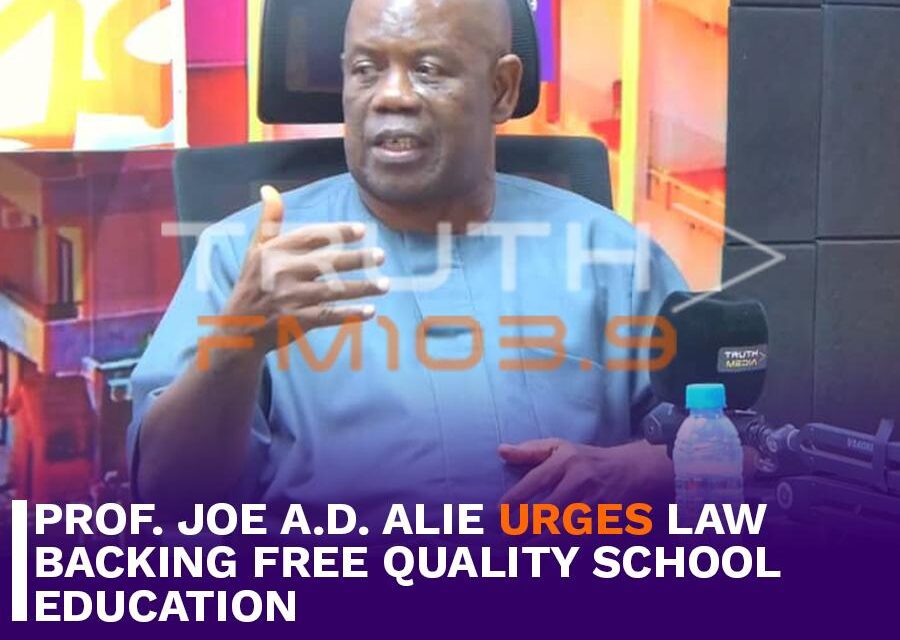
Freetown, 19th November 2025- Renowned historian, educator, and author Prof. Joe A.D. Alie has called on the government to legislate the Free Quality School Education (FQSE) program, launched in 2018 by H.E. President Julius Maada Bio.
Speaking during the maiden edition of the Truth Education Platform, Prof. Alie said enacting the policy into law would ensure it receives the attention it deserves.
“I think that we should really legislate the Free Quality School Education program. Irrespective of which government comes into power, it should continue because it is in the best interest of everyone, regardless of political affiliation,” he explained, adding that the initiative benefits the entire nation.
He stressed that the program is inclusive and does not discriminate based on region or tribe, noting: “It’s for every school-going child in this country, and this is why the government should legislate the FQSE.”
Prof. Alie also urged the government to prioritize a robust assessment of the initiative, closely tracking its successes and challenges since its introduction.
“I’m sure by now, almost seven years on, the government should be able to identify the initial challenges the MBSSE has faced with implementation. It’s important to step back, review what has been done, build on the successes, and minimize the challenges,” he said.
Prof. Alie, who retired as Dean of the School of Postgraduate Studies at the University of Sierra Leone in September 2024, was recently appointed Librarian and Archivist. His extensive academic and historical expertise continues to shape Sierra Leone’s educational landscape. He is set to launch a series of Social Studies textbooks for Primary 1–6 and JSS 1–3, and has completed his autobiography, A Life of Purpose: The Joe Alie Story, due for publication in early 2026.
Citing concerns raised by a head teacher in Kenema about delayed teacher remuneration and inadequate classroom furniture, Prof. Alie emphasized the need for government attention to teacher welfare and school infrastructure.
“When education becomes available to many, infrastructure becomes a big challenge,” he said, recalling similar issues during the post-independence expansion of education. “One of the easiest ways to bridge the gap is to ensure physical infrastructure, school buildings and furniture, is available.”
He added that teacher training and motivation are even more critical:
“You can build schools in a year or two, but training teachers to give their best is most important. Teachers play a bigger role because they deliver and impart knowledge at all levels. For that, they must be financially secure and in the right frame of mind. This is why the government must prioritize teacher welfare to achieve the Free Quality School Education program.”
Prof. Alie concluded by calling on all stakeholders, teachers, parents, and students to work collaboratively with the government to realize the aspirations of the FQSE.
“The government can launch and fund the program, but we all have roles to play. Parents should monitor and encourage their children to study, and students must be determined to succeed. Yes, there are challenges, but with a collective approach, we stand a better chance of securing a brighter future, one filled with integrity, purpose, and direction.”
Reflecting on past setbacks, he cautioned against repeating mistakes made during the implementation of the Education Review document, which introduced strategic reforms but was derailed by severe economic challenges before the war. Prof. Alie believes Sierra Leone can still build stronger foundations if education is given the utmost attention, priority, and resources it deserves, something he insists can be achieved if the FQSE is enacted into law.