By Nafisatu Olayinka Deen
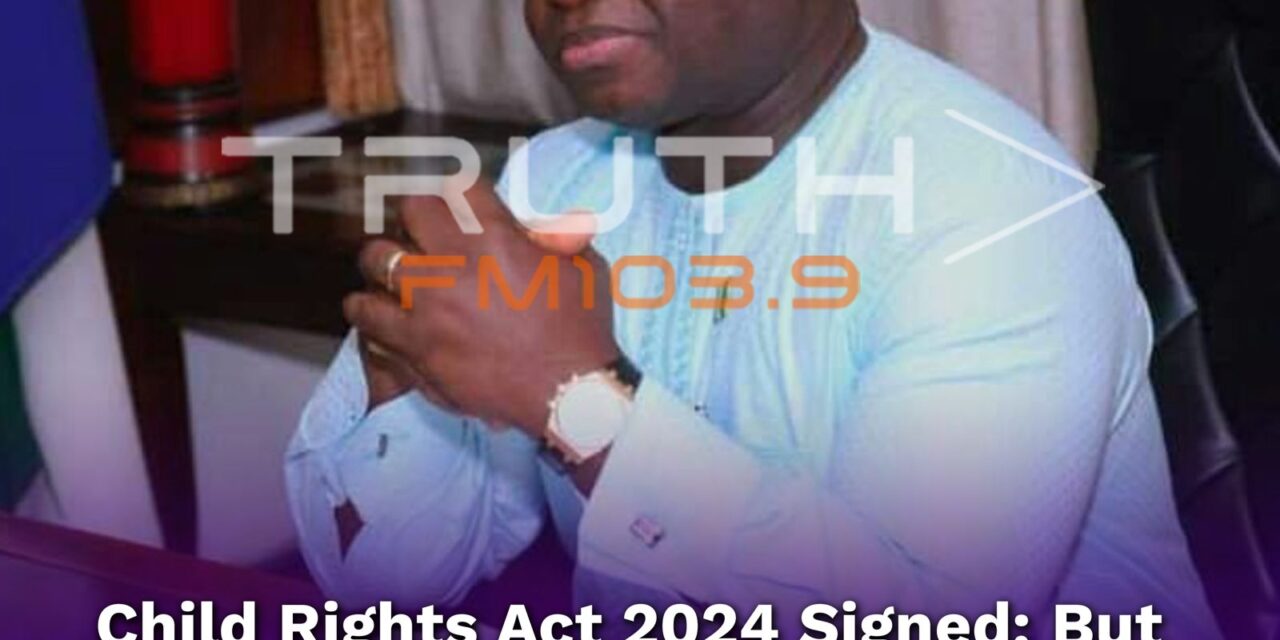
Freetown, 27th October 2025- On October 14 2025, President Julius Maada signed the Child Rights Act 2024, marking a new height in the protection of children, ushering in a new framework aimed at strengthening protections for children in Sierra Leone.
The legislation, passed by Parliament in July, introduces progressive reforms to safeguard children’s rights to education, healthcare, personal identity, and protection from abuse. It aligns with international treaties and is intended to modernize the country’s child welfare system.
As a post war country, such efforts have been a top priority for successive regimes. The abuse of children including using them as child soldiers, subjecting them to gender based violence and rape during the eleven-year civil war meant a lifetime of trauma for those who survived the carnage and ushered in a new chapter of rehabilitation and investing in the future of children.
While the law has been lauded for its forward-thinking provisions, it has also sparked widespread disappointment among human rights advocates and anti-Female Genital Mutilation campaigners, because the Act does not include an explicit ban on Female Genital Mutilation, a practice condemned by the ECOWAS Court as “one of the worst forms of violence against women” and, when intentionally inflicted, “meets the threshold for torture.” The omission has reignited debate over Sierra Leone’s commitment to protecting girls from harmful traditional practices.
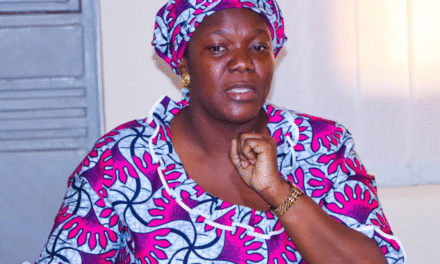
A Betrayal of Girls’ Rights– Fatmata Sankoh, Executive Director of Girls Alliance Incorporation, voiced deep concern over the President’s assent to the Child Rights Act, calling it a “profound disappointment.”
“While we cautiously welcome any legislative step that aims to protect children, our reaction to this specific assent is one of profound disappointment and deep concern”, she said. She criticized the law’s failure to criminalize FGM, stating that the omission of the clause that criminalizes FGM sends a troubling message, which suggests that not all children are equally worthy of protection, girls in particular. “By explicitly omitting the criminalization of Female Genital Mutilation, the Act fails in its most fundamental duty: to protect every child from harm. It creates a hierarchy of rights where some children, specifically girls, are left legally exposed to a practice that is unequivocally a form of violence and a violation of their bodily autonomy.”
Children Are Disappointed – The president of the Children’s Forum Network, Phillipa Cride-Dole, who speaks on behalf of children echoed the same concerns as Sankoh. “The children of Sierra Leone felt disappointed and we are not happy”, she told Truth Media.
She noted that all advocacy efforts to ban FGM has proven to be futile but she is still hopeful.
“We felt as if our voices were not heard after series of advocacy to put a ban on the practice, especially when done to children.” She emphasizes that her opposition is not to the cultural practice of ‘Bondo’ itself, but to its imposition on children. “I am not against Bondo as a culture but children should be spared from it”
What does this mean for the safety of women and girls? – Sankoh believes that this legislative omission effectively grants impunity to those who continue the practice, reinforcing its persistence and undermining efforts to eradicate it.
“This omission sends a dangerous message. It effectively sanctions the continued mutilation of girls under the guise of cultural practice, undermining their rights to health, security, and freedom from torture and cruel, inhuman, or degrading treatment.
It tells perpetrators that this form of violence is tolerated, and it tells survivors that their pain is not a legislative priority. This decision risks reversing years of advocacy and grassroots work and will undoubtedly have a chilling effect on reporting and seeking help,” she noted.
Ishmael Cole, National Coordinator of The Forum Against Harmful Practices, voiced shared worries, emphasizing that without criminalization, perpetrators will act with impunity.
“FGM leads to severe physical complications, mental trauma, and loss of educational opportunity. In extreme cases, it results in death,” Cole said. “The omission undermines efforts to reduce its prevalence and may reinforce harmful social norms that regard the practice as acceptable” he noted.
Government’s Response–Minister of Gender and Children’s Affairs, Isata Mahoi, addressed the criticism by affirming that it is within the President’s constitutional mandate to decide which legislation is enacted. She emphasized that this should not be interpreted as a lack of commitment to safeguarding the rights and welfare of children. “The president has the authority to decide on what to sign into law, but that does not mean he is not committed to protecting the rights of children”, she stated.
Despite their disappointment, advocates remain hopeful that the conversation sparked by the Act will lead to stronger protections in the future.
“As children advocates, we look forward to a sustainable law that will help protect women and girls”, Cride-Dole said.
Fatmata Sankoh stated that while she hopes for a future where all children are protected from harm regardless of gender, the failure to criminalize FGM in the new legislation casts doubt on the government’s true commitment to safeguarding girls and confronting harmful cultural practices.
“A genuine commitment to protecting women and children must be comprehensive and unwavering, especially when it involves challenging deep-seated cultural norms.
Failing to use this pivotal legislative opportunity to outlaw FGM raises serious questions about the depth of that commitment and the political will to prioritize the safety of girls over political expediency but nonetheless I am hoping for a future that will protect all children from any form of harm irrespective of their sex,” she said.
‘This story is brought to you with support from the Africa Transitional Justice Legacy Fund (ATJLF) through the Media Reform Coordinating Group (MRCG), under the project ‘Engaging Media and Communities to Change the Narrative on Transitional Justice Issues in Sierra Leone.’